




Panoramic view of Tunisia after the revolution

Tunis - Arabstoday
Below the watchtower of the ancient fortress known as the Ribat, a panoramic view of the Tunisian city of Sousse unfolds. To the east lies the Mediterranean coast, where the Carthaginians moored their navy during epic battles with the Roman Empire. To the south and west, the labyrinthine passageways of the medina, the city’s old walled quarter, extend to the vanishing point amid a sea of tightly packed houses and minarets. On a sunny January afternoon, I walked along the battlements of the empty fortress, peering through arrow slits into the streets where elderly Tunisian men in red caps and women in head scarves strolled. It occurred to me that I could see nearly everything in Sousse from this vantage point. Except for one: fellow travelers. Since arriving in Tunisia a few days earlier, I had barely glimpsed another tourist. True, it was low season. But the real reason, I knew, was the Jasmine Revolution of January 2011, when Tunisians rose up against an authoritarian regime and forced the flight of the longtime strongman Zine el-Abidine Ben Ali. Travelers, understandably, had gotten spooked. Tourism fell by more than 30 percent last year, even though, in the months after Mr. Ben Ali’s ouster, the country was generally calm. During my visit, hotel receptionists and restaurant servers repeatedly bemoaned the lack of tourists to me. So I was pleasantly surprised when a German family of four interrupted my admittedly peaceful reverie atop the watchtower. They had been traveling by bus, admiring “the religion and the culture,” the father, Tobias Haug, told me, as he scanned the view. “Everyone has been very friendly,” he said, adding that friends in Germany had expressed concern before their departure. “They don’t know that the war’s been over for more than a year,” Mr. Haug said. And so it is — mostly. As attention has turned from Tunisia to the far bloodier Arab Spring uprisings in Egypt, Libya, Syria and beyond — many of them inspired by the Tunisian example — the North African nation is still trying to restore its image in the eyes of the world. But for travelers, a visit to Tunisia right now offers a chance not only to witness this pivotal moment in the country’s history, but also to get a sense of the struggles and stakes of the Arab Spring in general. As dictators around the region fall or are challenged, Tunisia, while far from untroubled, offers a reassuring example of what might emerge from the wreckage. Elections in October produced results that would have been unimaginable during the Ben Ali years, when Islamist groups and dissent were smothered: a prime minister from a moderate Muslim party and a president with a résumé as a human rights campaigner. A year after the revolution’s end, I took advantage of Tunisia’s well-developed tourism infrastructure — abundant hotels, clean restaurants and generally effective transportation — and began an eight-day journey by bus and train to see the country’s storied sights and take the pulse of its vital and suffering tourism sector. In cities like Tunis, where public debate now finds an outlet in newspapers, exhibitions and street art, I found friendly people who were more than happy to share their ideas with travelers. Farther afield, in more tourism-dependent places like El Jem, with its gorgeous Roman ruins, locals expressed relief at the old regime’s demise, but also voiced an urgent need to start refilling empty hotels and restaurants. Everywhere, I found Tunisians to be laid-back and grateful to anyone willing to visit their country during this transitional time. IT rained my first day in Tunis. I leaned out my window in the rather dated Hotel Excel and peered down at Avenue Habib Bourguiba, site of the biggest protests. Lined with French colonial edifices and lively sidewalk cafes, the thoroughfare provided a crash course in modern Tunisian history, starting with its name. Habib Bourguiba, a Paris-educated lawyer, offered a passionate voice against French colonialism and helped win the country’s independence in 1956. The next year he became president and began modernizing the country, ensuring universal education and mandating equal rights for women. Polygamy was banned, and the veil discouraged.



GMT 14:33 2018 Monday ,22 January
Mongolia – Vast wilderness and rugged adventureGMT 09:17 2017 Sunday ,29 October
British kayak adventurer slain in Brazil's AmazonGMT 10:51 2017 Thursday ,15 June
Record-breaking year for Abu Dhabi Ports’ Cruise TerminalGMT 19:01 2017 Wednesday ,14 June
Alaska: Adventure aboard the MS VolendamGMT 06:59 2017 Wednesday ,14 June
Travel: Embrace the island beauty of the PhilippinesGMT 16:48 2017 Saturday ,20 May
A journey back in time at UAE's souqsGMT 22:48 2017 Thursday ,18 May
A year-long walk from Indonesia to MakkahGMT 13:54 2017 Friday ,17 March
Christo faces the sands of time after 38 years of work



With Job Cuts, China Deal
France's Carrefour revamps operations
Paris - Emiratesvoice
France's Carrefour group said Tuesday it is overhauling its business in a transformation plan involving thousands of job cuts, a product revamp and new partnerships in China. Carrefour, which was the world'sTo partake in Beiteddine Festivals
Singer Bruni arrives in Beirut Sunday evening
Beirut - NNA
French renowned singer and supermodel, Carla Bruni, is expected to arrive this evening at Rafic Hariri International Airport in Beirut, accompanied by her husband, former French President Nicolas Sarkozy. BruniIn France
Microsoft to open 4 data centres
Paris - Emiratesvoice
Microsoft is to open 4 data storage centers in France to meet strong customer demand for cloud computing, the head of the software giant's French operations told the Agence France-Presse onIn Olympic Spotlight
'Friendly and kind' N. Korean skaters
Taipei - Emiratesvoice
North Korea's figure skaters Ryom Tai-Ok and Kim Ju-Sik are "friendly and kind and a little bit shy", South Korea's Kim Kyueun said Tuesday ahead of their hugely anticipated Olympic appearance. The skater is competing with her partner Alex Kam in theFor $11.6 Bn
Sanofi buys US haemophilia treatment
Paris - Emiratesvoice
French pharmaceutical firm Sanofi said Monday it had reached an agreement to purchase US biotech company Bioverativ, which specialises in treatments for haemophilia and rare blood disorders, for $11.6 billion. Sanofi's chief executive Olivier Brandicourt said the acquisition "enhances its presence in specialtyParis show pays homage
to 'eternal style' of late Alaia
Paris - Emiratesvoice
Two months after legendary designer Azzedine Alaia's sudden death plunged the fashion world into mourning, an exhibition in homage to the "King of Cling" opens Monday in his studios in Paris. The Tunisian-born designer, renowned for the way his clothes hugged the body, died suddenly in November aged 82, reportedly of heart failure after falling down the stairs at his home. The diminutive maverick, who ignored fashion week convention by showing when and where he wanted, in July produced his first couture collection in six years to rapturous reviews. Now some of his most iconic dresses are going on display in the glass-roofed gallery next to his studio and home in the Marais district where he used to show his creations. It includes the dress worn by supermodel Naomi Campbell, his longtime friend and muse, when she led
GMT 10:21 2016 Wednesday ,23 March
cartoon eleven
GMT 10:18 2016 Wednesday ,23 March
cartoon eight
GMT 10:18 2016 Wednesday ,23 March
cartoon seven
GMT 09:58 2016 Wednesday ,23 March
cartoon four
GMT 15:33 2016 Monday ,09 May
Asian stocks mixed after Chinese trade contracts
GMT 05:14 2024 Wednesday ,07 February
Sophisticated Classic Dining Room Design Ideas
GMT 20:01 2017 Tuesday ,10 October
UAE Ambassador submit credentials to ASEAN Secretary
GMT 10:14 2017 Wednesday ,08 March
Turkey, Germany must rebuild friendship 'step by step'
GMT 09:10 2016 Saturday ,24 September
Pakistan send West Indies in to bat in first T20
GMT 22:20 2017 Tuesday ,07 November
Flanagan, Kamworor win New York Marathon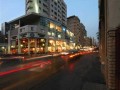
GMT 05:17 2024 Wednesday ,07 February
Amazon to open first cashierless shop
GMT 15:14 2018 Wednesday ,29 August
The Putin Method: All Nice And Legal
GMT 12:17 2016 Monday ,10 October
Qatar Airways makes major purchase of Boeing jets
GMT 09:41 2016 Thursday ,08 September
South Africa's ANC faces deep crisis after vote defeat
GMT 13:30 2017 Friday ,17 February
Rafter quits Tennis Australia post amid Tomic, Kyrgios stand-off
GMT 09:19 2017 Friday ,02 June
Actress Nadeen Al Rassi highlights success of new drama
GMT 12:24 2017 Saturday ,27 May
Nokia phone with dual camera, 8GB RAM was just spotted
GMT 11:52 2016 Thursday ,29 December
In boost to ECB, eurozone lending climbs in November


Maintained and developed by Arabs Today Group SAL.
All rights reserved to Arab Today Media Group 2025 ©
Maintained and developed by Arabs Today Group SAL.
All rights reserved to Arab Today Media Group 2025 ©


Send your comments
Your comment as a visitor