




US signals likely delay in troop pullout from Afghanistan


US soldiers take a break after an award ceremony
Kabul - AFP
President Barack Obama's new Pentagon chief said Saturday the United States was seriously considering slowing the pace of a troop withdrawal from Afghanistan, as the country faces a growing Taliban insurgency.
US Defense Secretary Ashton Carter's comments in Kabul offered the clearest sign yet that Washington was ready to delay the closure of some bases and retain more troops after appeals by Afghanistan's new President Ashraf Ghani and advice from commanders.
To safeguard "hard-won" progress, Obama "is considering a number of options to reinforce our support for President Ghani's security strategy, including possible changes to the timeline for our drawdown of US troops," Carter said after talks with Afghan leaders.
"That could mean taking another look at the timing and sequencing of base closures to ensure we have the right array of coalition capabilities," he said at a joint news conference with Ghani.
Apart from troop numbers, the United States and its allies would need to make "long-term commitments in resources, equipment and other support" to ensure the success of the Afghan forces, he said.
Carter's visit comes amid a sharp rise in Afghan casualties from the 13-year conflict, with the UN recording a 22 percent increase in the number of civilians killed and injured in 2014 due to an intensification in ground fighting between government and insurgent forces.
It also comes as Obama faces a decision about the timetable for a troop drawdown in Afghanistan. Under the current plan, the 10,000-strong US force is due to drop to roughly 5,000 by the end of 2015 and then pull out altogether by the time Obama leaves office in two years.
But the Obama administration already has delayed the pace of the withdrawal, allowing 1,000 additional American forces to remain this year.
And the US commander on the ground, General John Campbell, has suggested he favours slowing the drawdown further, though the details of the possible options before Obama remain unclear.
Afghan leaders and some lawmakers have urged Obama to reconsider the withdrawal timetable, warning that an early US exit could jeopardise security and international aid.
Carter said as part of the review of the pullout plan, Washington was also was "rethinking the details of the counter-terrorism mission" that currently targets Al-Qaeda militants with raids by US and Afghan special forces and drone strikes.
He said the single most important factor that had prompted the review of the troop withdrawal timetable was the formation of a unity government last year led by Ghani, which he said had introduced "certainty" and "predictability".
"That's something we couldn't have counted on a few months ago," he said, calling it "major change".
On the first day of a two-day visit, Carter held talks with the US commander in Kabul, Campbell, as well as General Lloyd Austin, head of US Central Command which oversees American forces in the Middle East and Central Asia.
- Peace talks -
His trip coincides with a concerted effort by Ghani to promote peace talks between Kabul and the Taliban, with Pakistan voicing strong support for the initiative.
Ghani declined to confirm whether Taliban leaders were now ready to enter into direct negotiations with his government, but he said the conditions were ripe for a potential breakthrough.
"The grounds for peace have never been better in the last 36 years," Ghani said.
He said he was "hopeful" and "the direction is positive". But he added: "We cannot make premature announcements."
The United States and a Taliban spokesman this week denied there were new plans to hold peace talks in Qatar, despite claims by some militant leaders.
Asked about the presence of the Islamic State group in Afghanistan, Carter played down the threat, saying some Taliban insurgents were making an attempt at "rebranding" themselves.
"The reports I've seen still have them in small numbers and aspirational," he said.
The United States first launched military action in Afghanistan after the September 11, 2001 attacks, toppling the Taliban regime that had refused to break ties with Al-Qaeda.
A US-led NATO force eventually swelled to 130,000 troops, but last year the mission wrapped up its combat operations against Taliban insurgents. A contingent of 12,500 foreign troops has remained to back up Afghanistan's 350,000 soldiers and police.


GMT 01:03 2018 Wednesday ,24 January
Trump 'imitates' Modi's accent in private conversation: ReportGMT 21:24 2018 Tuesday ,23 January
Puigdemont accuses EU of not defending rights in CataloniaGMT 21:18 2018 Tuesday ,23 January
Vietnam oil exec 'kidnapped' from Germany jailed for lifeGMT 21:08 2018 Tuesday ,23 January
Turkey in new assault on Kurdish militiaGMT 21:04 2018 Tuesday ,23 January
Turkey detains 24 over 'terror propaganda'GMT 20:52 2018 Tuesday ,23 January
Dawoodi Bohra leader arrives in DubaiGMT 22:09 2018 Monday ,22 January
Israel apologises to JordanGMT 16:11 2018 Sunday ,21 January
Pope condemns criminals in crime-stricken Peruvian city



With Job Cuts, China Deal
France's Carrefour revamps operations
Paris - Emiratesvoice
France's Carrefour group said Tuesday it is overhauling its business in a transformation plan involving thousands of job cuts, a product revamp and new partnerships in China. Carrefour, which was the world'sTo partake in Beiteddine Festivals
Singer Bruni arrives in Beirut Sunday evening
Beirut - NNA
French renowned singer and supermodel, Carla Bruni, is expected to arrive this evening at Rafic Hariri International Airport in Beirut, accompanied by her husband, former French President Nicolas Sarkozy. BruniIn France
Microsoft to open 4 data centres
Paris - Emiratesvoice
Microsoft is to open 4 data storage centers in France to meet strong customer demand for cloud computing, the head of the software giant's French operations told the Agence France-Presse onIn Olympic Spotlight
'Friendly and kind' N. Korean skaters
Taipei - Emiratesvoice
North Korea's figure skaters Ryom Tai-Ok and Kim Ju-Sik are "friendly and kind and a little bit shy", South Korea's Kim Kyueun said Tuesday ahead of their hugely anticipated Olympic appearance. The skater is competing with her partner Alex Kam in theFor $11.6 Bn
Sanofi buys US haemophilia treatment
Paris - Emiratesvoice
French pharmaceutical firm Sanofi said Monday it had reached an agreement to purchase US biotech company Bioverativ, which specialises in treatments for haemophilia and rare blood disorders, for $11.6 billion. Sanofi's chief executive Olivier Brandicourt said the acquisition "enhances its presence in specialtyParis show pays homage
to 'eternal style' of late Alaia
Paris - Emiratesvoice
Two months after legendary designer Azzedine Alaia's sudden death plunged the fashion world into mourning, an exhibition in homage to the "King of Cling" opens Monday in his studios in Paris. The Tunisian-born designer, renowned for the way his clothes hugged the body, died suddenly in November aged 82, reportedly of heart failure after falling down the stairs at his home. The diminutive maverick, who ignored fashion week convention by showing when and where he wanted, in July produced his first couture collection in six years to rapturous reviews. Now some of his most iconic dresses are going on display in the glass-roofed gallery next to his studio and home in the Marais district where he used to show his creations. It includes the dress worn by supermodel Naomi Campbell, his longtime friend and muse, when she led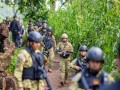
GMT 05:09 2024 Tuesday ,06 February
The Saudi-led Arab Coalition Forces have targeted a meeting of Houthi commanders in Beit Al Faqih, Hodeidah, killing scores of the
GMT 02:19 2017 Monday ,24 July
Pensive Neymar Instagram picture
GMT 12:07 2018 Tuesday ,23 January
Syria Kurds urge civilians to take up arms against Turk assault
GMT 22:49 2017 Tuesday ,02 May
Gunmen Kill 3 Policemen in Cairo
GMT 09:49 2017 Saturday ,23 December
Ukraine and Russia both claim win in gas dispute
GMT 09:53 2016 Sunday ,15 May
OMEGA official timekeepers
GMT 10:47 2017 Tuesday ,05 December
Gulf Air launches Bahrain Tourist
GMT 05:04 2024 Tuesday ,06 February
Skincare PR Performance Full Year 2017GMT 13:58 2013 Thursday ,24 January
Angola\'s Dos Santos Africa\'s first woman billionaire
GMT 02:52 2016 Saturday ,24 December
Volkswagen reaches deal with 80,000 US 3.0-liter vehicle owners
GMT 07:10 2017 Thursday ,13 July
Two cholera-medicine shipments
GMT 06:34 2017 Monday ,28 August
Shaikh Nasser Award final stage underway
GMT 21:25 2017 Saturday ,16 September
ICC rules out 'miraculous' return of int'l cricket
GMT 09:53 2017 Tuesday ,02 May
Minister of Administrative Development Affirms Qatar's Commitment to Protect Workers' Rights
GMT 04:51 2017 Sunday ,15 October
Nakheel investment in Deira Islands surges to Dh7.5b
GMT 13:07 2016 Saturday ,26 March
Miyajima's LED numbers tell tale of life
GMT 00:55 2018 Monday ,15 January
Gaza fisherman shot dead by Egyptian army
GMT 10:23 2017 Wednesday ,27 December
Lavrov, Tillerson discuss need for urgent NKorea negotiations


Maintained and developed by Arabs Today Group SAL.
All rights reserved to Arab Today Media Group 2025 ©
Maintained and developed by Arabs Today Group SAL.
All rights reserved to Arab Today Media Group 2025 ©


Send your comments
Your comment as a visitor